

The Kwame Nkrumah University of Science and Technology (KNUST) Department of Herbal Medicine has officially launched activities to mark its 25th anniversary, celebrating a quarter-century of advancing herbal medicine education, research, and practice in Ghana and beyond.
The ceremony, held at the College of Architecture and Built Environment (CABE) Auditorium, was themed “25 Years of Advancing Herbal Medicine Education and Research: Strengthening Evidence-Based Practice for Global Health and Sustainable Development.”
Delivering the keynote address, the Vice-Chancellor of KNUST, Prof. Rita Akosua Dickson, described the Department as a beacon of excellence in teaching, research, and innovation, producing graduates who are not only competent clinicians but also researchers, educators, and leaders.
"Throughout its history, the Department has served as a centre of scientific knowledge and good practices for care, health, medicine, training, and research. We want to believe that the next 25 years will give Ghana, the sub-region, the continent, and the globe even more,” she stated.
Professor Dickson emphasized that the anniversary represents more than a ceremonial milestone, noting that it reflects the vision, courage, resilience, and unwavering commitment of the pioneers who established the Department. She paid tribute to distinguished contributors, including Professor T. C. Fletcher, Professor Duwiejua Mahama, Professor Kofi Annan, Professor Merlin Mensah, and past Deans and leaders of the Faculty of Pharmacy and Pharmaceutical Sciences.
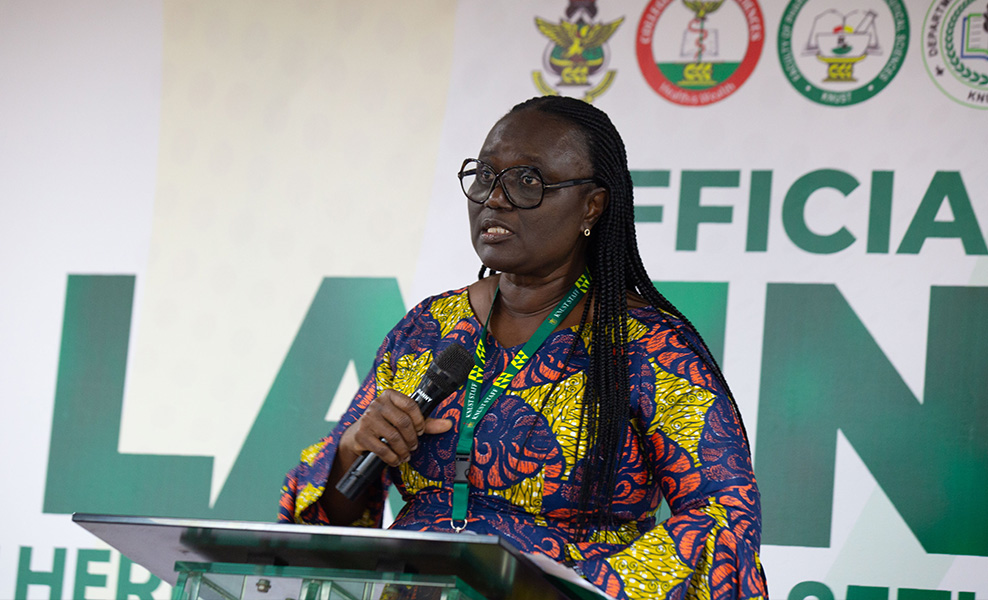
The Dean of the Faculty of Pharmacy and Pharmaceutical Sciences, Prof. Samuel Asare-Nkansah, described the programme’s evolution as challenging yet rewarding. He explained that the herbal medicine programme was introduced in the early 2000s following the passage of Ghana’s Traditional Medicine Act.
According to him, over the past 25 years, the Department has trained approximately 600 graduates who are making significant contributions to healthcare delivery in Ghana and abroad, with many holding positions in regulatory bodies and healthcare institutions.
“What started as a pilot programme has now grown into a fully recognised academic discipline making national impact,” he said.
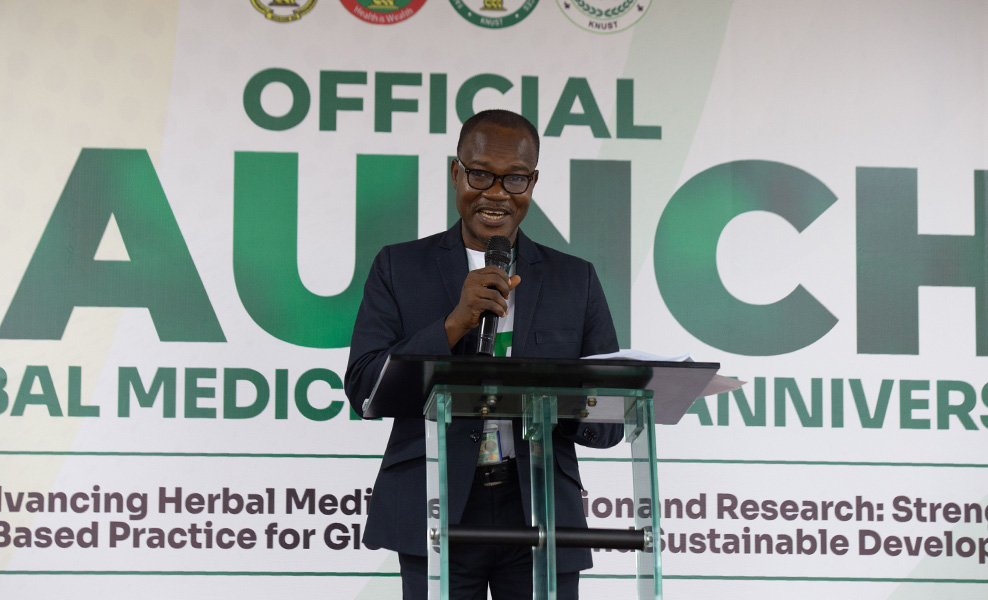
The Provost of the College of Health Sciences, Prof. Christian Agyare, called on the Department to move from strong local recognition to greater global influence by deepening evidence-based research in traditional medicine.
“About 70 to 80 per cent of Africans depend on herbal medicine,” he noted, stressing the need for proper regulation, scientific validation, and professional training. “We have done a lot in 25 years, but the next phase must focus on global recognition and stronger research output.”

Adding to the discourse, Prof. Alex Asase, Executive Director of the Centre for Plant Medicine Research and former Head of the Department of Plant and Environmental Biology at the University of Ghana, underscored the importance of Ghana’s rich natural heritage in national development. He advocated stronger scientific validation and the integration of herbal medicine into mainstream healthcare systems.
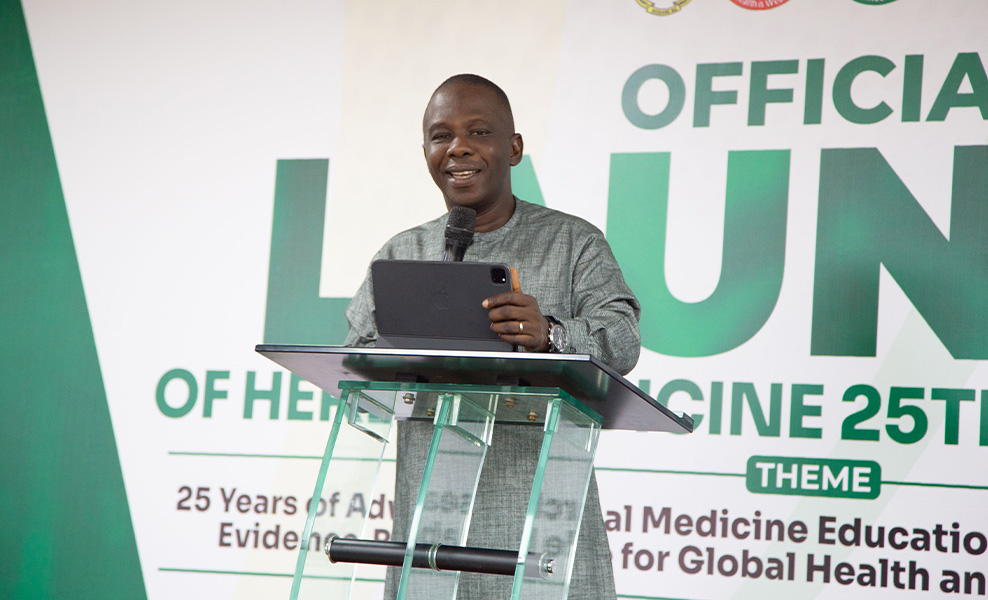
“Traditional medicine remains a major pillar of healthcare, especially in Africa and Asia, largely because of its accessibility and affordability,” he said.
The Acting Registrar of the Traditional Medicine Practice Council, Dr Yakubu Tobor Yusuf, who is an alumnus of the programme, described the celebration as both memorable and personal. He recalled the dedication of early lecturers whose discipline and passion shaped generations of students.
Dr. Yusuf also highlighted the growing global relevance of traditional medicine, citing the World Health Organisation’s adoption of its Traditional Medicine Strategy in June 2025, with an emphasis on evidence, quality, and integration into healthcare systems.
“The global traditional medicine market is valued at over 200 billion dollars, and in Ghana alone, the industry generated about GH₵2 billion in 2023,” he said. “This shows that herbal medicine is not only about healing but also about economic empowerment.”
He reaffirmed KNUST’s critical role as a stakeholder in the development of the sector and called for sustained investment in training, research, and innovation to support the continued growth of herbal medicine in Ghana and on the global stage.